

Tag: innovation

  • Magtrax Unveils Floating Roads: Urban Transit Gets a Gravity-Defying Upgrade

    Magtrax Unveils Floating Roads: Urban Transit Gets a Gravity-Defying Upgrade

    In what could be one of the most radical urban infrastructure proposals of the decade, transportation tech firm Magtrax has revealed the world’s first functional prototype of a floating roadway system—elevated magnetically above city streets, with zero physical contact.

    Debuting at the International Future Transit Expo in Tokyo, the company’s flagship project—called SkyLine—uses high-density magnetic levitation tracks embedded in lightweight modular panels, which can be deployed above existing roadways or urban walkways. These floating paths are designed for autonomous electric shuttles and lightweight cargo drones, enabling smooth, silent travel without the congestion or wear of traditional asphalt.

    A New Layer for Cities

    “Instead of redesigning our cities from the ground up, we’re adding a layer above them,” said Magtrax CEO Daelin Zhou during the keynote demonstration. “SkyLine represents a way to rapidly expand urban transit without demolition, disruption, or emissions.”

    Zhou demonstrated a three-car autonomous shuttle silently gliding along the elevated SkyLine path at 70 km/h, using quantum-stabilized maglev rails that maintain perfect balance even in wind or uneven loads. The entire structure is supported by carbon-fiber pylons spaced roughly every 30 meters, and installation time for each kilometer of SkyLine, according to Magtrax, is less than a week.

    Energy-Efficient and Emission-Free

    Because the system runs on magnetic levitation, friction is nearly eliminated, meaning lower energy consumption and less maintenance compared to rubber tires or rail systems. Power is supplied via embedded solar film along the path’s canopy, with auxiliary backup from urban grids or battery arrays.

    The result? Near-zero emissions transit with minimal infrastructure footprint.

    Magtrax claims SkyLine can move up to 8,000 passengers per hour per direction, with customizable stops for neighborhoods, office parks, or high-density zones. For package logistics, a secondary drone-level track runs in parallel, optimized for high-speed, low-weight freight.

    Pilot Cities in Progress

    Several global cities are already negotiating to become early adopters. Singapore and Dubai are reportedly in advanced talks with Magtrax for pilot networks as early as 2026, and exploratory discussions are underway in Los Angeles and Amsterdam.

    Urban planners see floating infrastructure as a potential solution to long-standing problems like pedestrian-vehicle conflict, delivery congestion, and transit deserts. “Imagine a city where buses don’t get stuck in traffic, deliveries don’t block intersections, and people can get from A to B without a car or subway,” said Dr. Helena Bosch, an urban futurist at TU Delft. “That’s the promise of SkyLine.”

    Challenges in the Air

    Skeptics, however, point out concerns around zoning, cost, and long-term durability. Questions remain about emergency access, aesthetic impact, and public acceptance of overhead vehicles humming above residential areas.

    Magtrax insists it is prioritizing modularity, safety, and visual integration into existing skylines. “We’re not trying to create a sci-fi future,” Zhou said. “We’re trying to solve real urban problems with real, buildable technology.”

    With SkyLine set to enter full-scale testing by early 2026, the next few years could determine whether Magtrax’s floating roads will remain an ambitious vision—or become a defining feature of future cities.
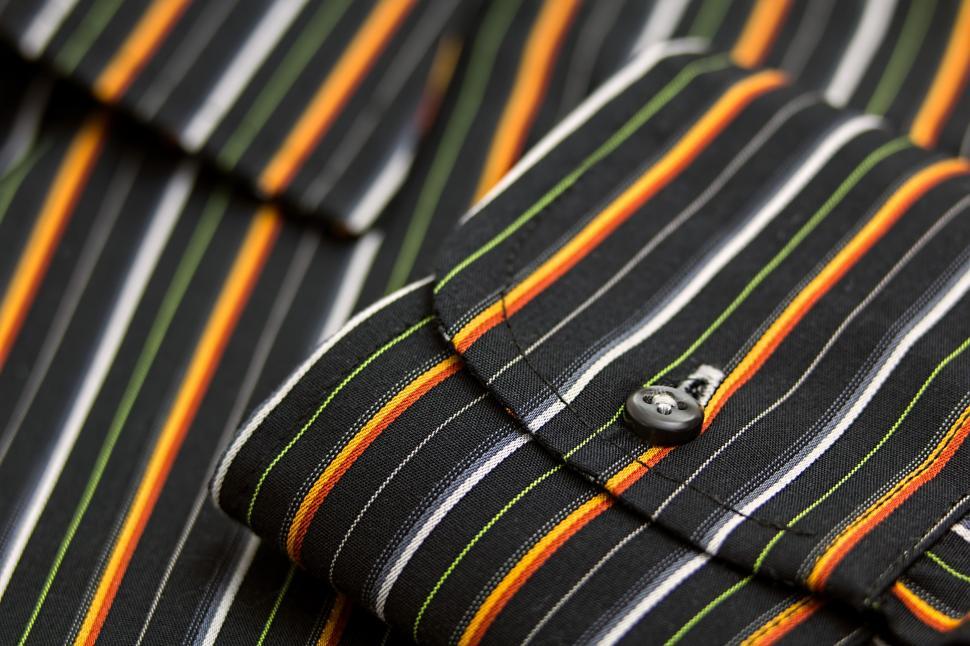

  • Smart Fabric Turns Clothing into Real-Time Health Monitors

    Smart Fabric Turns Clothing into Real-Time Health Monitors

    In a major leap for wearable technology, biotech startup NeuroWeave has unveiled a new line of smart fabrics that can monitor vital signs through your clothing—with medical-grade accuracy.

    The innovation, called PulseSkin, uses ultra-flexible nanosensors woven directly into fabric threads to continuously track biometrics like heart rate, respiration, hydration, and even blood pressure. Unlike smartwatches or fitness bands, PulseSkin requires no direct skin contact or bulky devices. Just wear a shirt, and it starts tracking.

    Seamless, Stylish, and Smart

    “We wanted to create health tech you don’t have to think about,” said NeuroWeave co-founder and CTO Arjun Sethi. “No batteries, no charging cables, no apps constantly draining your phone. Just clothing that keeps you connected to your body in the background.”

    The sensors, powered by body heat and ambient motion, wirelessly transmit data to a user’s phone or smartwatch. The system is entirely washable and designed to feel indistinguishable from normal clothing—no hard patches, no plastic seams.

    Initial prototypes include workout gear, sleepwear, and compression shirts designed for high-risk workers and athletes. Each piece automatically adjusts to the user’s body and activity level, offering adaptive insights based on daily patterns.

    Early Medical Applications

    What sets PulseSkin apart isn’t just convenience—it’s precision. In clinical trials, the fabric matched the accuracy of hospital-grade ECG machines during physical exertion. That kind of capability opens doors far beyond fitness. NeuroWeave is already partnering with two hospitals in the U.S. to trial PulseSkin garments for remote patient monitoring, especially for cardiovascular conditions.

    For doctors and nurses, the tech could eliminate the need for clunky wires and constant vitals checks. For patients, it means more freedom, mobility, and dignity—without sacrificing safety.

    “The idea that we can catch cardiac events before they happen just by analyzing patterns in a patient’s T-shirt is groundbreaking,” said Dr. Reema Alvi, a cardiologist at Stanford Medical Center, who’s part of the pilot study.

    Fashion Meets Function

    Perhaps just as revolutionary is PulseSkin’s focus on aesthetics. NeuroWeave has partnered with fashion designers to ensure the clothing doesn’t just work well—it looks good too. From minimalist athletic lines to high-end tailored pieces, the goal is to blur the line between health tech and everyday wear.

    Sethi describes the company’s vision as “Apple Watch meets Armani.” He says the ultimate goal is to make health data invisible, ambient, and automatic.

    Launch Timeline

    The first consumer-ready PulseSkin items are expected to launch in late 2025 through a direct-to-consumer model, with hospital and enterprise versions following in 2026. NeuroWeave has already raised $140 million in Series B funding, with investors citing the platform’s potential to reshape not only wearables, but healthcare delivery itself.

    As technology increasingly moves closer to the body—and now, into it—PulseSkin may represent the next phase of ambient, embedded computing. In a world chasing both wellness and convenience, smart clothing might just be the thread that ties them together.

  • Startup Unveils Transparent Solar Screens for Phones and Tablets

    Startup Unveils Transparent Solar Screens for Phones and Tablets

    A new innovation could soon change the way we interact with our devices—by making their screens generate power while we use them.

    This week, Silicon Valley-based startup LucentCell revealed a working prototype of the world’s first fully transparent photovoltaic screen, capable of turning ambient light into usable energy. The technology, which the company calls SolarGlass, transforms smartphone and tablet displays into discreet solar panels—charging the device anytime it’s exposed to light.

    A Window Into the Future

    Unlike traditional solar panels that use opaque silicon layers, SolarGlass integrates a layer of ultra-thin, nanomaterial-based solar cells that are nearly invisible to the naked eye. The panel harvests energy from both natural sunlight and artificial indoor lighting, providing a continuous trickle charge that the company says can extend device battery life by up to 60% on a single charge.

    “Imagine using your phone all day without worrying about finding a charger,” said LucentCell CEO Maya Krishnan at the company’s press unveiling. “With SolarGlass, we’re making that future not only possible, but scalable.”

    According to Krishnan, the technology has already been tested on OLED and mini-LED screens without any reduction in display quality or brightness. The company plans to license SolarGlass to phone manufacturers by early 2026, with a goal of integrating the panels into commercial devices by the end of that year.

    Beyond Phones

    While smartphones are the obvious starting point, LucentCell’s ambitions reach much further. The company is already working with partners in the wearables and automotive industries to develop transparent solar applications for smartwatches, augmented reality glasses, and car infotainment systems.

    In the consumer tech world—where battery life and charging convenience are constant concerns—SolarGlass could be a breakthrough. For sustainability advocates, the implications are even bigger. If widely adopted, LucentCell’s technology could drastically reduce reliance on wall charging, lower device energy usage, and curb the demand for lithium-heavy battery upgrades.

    Skepticism Remains

    Despite the buzz, some industry analysts urge caution. “Transparent solar has long been a holy grail in materials science, but scaling it affordably has been the barrier,” said James Ayers, senior innovation analyst at FutureDesign. “If LucentCell has cracked both the cost and clarity issues, this could be a defining moment. But the devil is in the manufacturing details.”

    LucentCell says its production process is based on modified roll-to-roll printing—similar to the one used for flexible displays—and can be integrated into existing display manufacturing pipelines. Still, widespread adoption will likely depend on how well the technology performs in day-to-day use across various lighting environments.

    A Brighter, Wireless Tomorrow?

    As technology increasingly weaves itself into everyday life, innovations like SolarGlass represent more than just a new feature—they hint at a larger shift toward ambient computing, where devices work in the background, powered passively by the world around us.

    Whether SolarGlass becomes the next industry standard or a niche high-end feature, one thing is clear: LucentCell has tapped into a growing desire for smarter, greener, and more independent tech. And with the first generation of solar-screened devices already in testing, the wait for wireless, worry-free energy might be shorter than we think.