
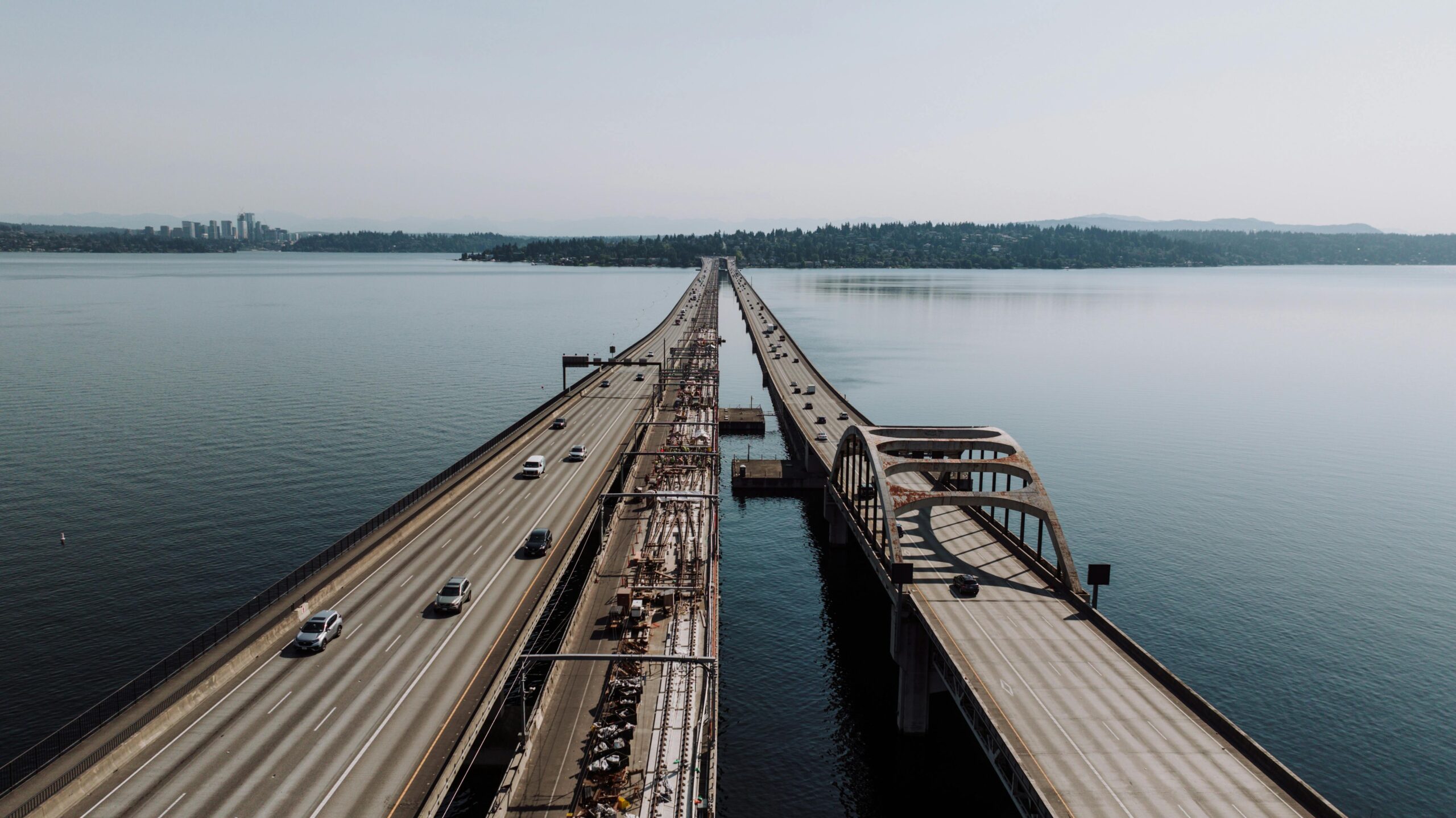
In what could be one of the most radical urban infrastructure proposals of the decade, transportation tech firm Magtrax has revealed the world’s first functional prototype of a floating roadway system—elevated magnetically above city streets, with zero physical contact.
Debuting at the International Future Transit Expo in Tokyo, the company’s flagship project—called SkyLine—uses high-density magnetic levitation tracks embedded in lightweight modular panels, which can be deployed above existing roadways or urban walkways. These floating paths are designed for autonomous electric shuttles and lightweight cargo drones, enabling smooth, silent travel without the congestion or wear of traditional asphalt.
A New Layer for Cities
“Instead of redesigning our cities from the ground up, we’re adding a layer above them,” said Magtrax CEO Daelin Zhou during the keynote demonstration. “SkyLine represents a way to rapidly expand urban transit without demolition, disruption, or emissions.”
Zhou demonstrated a three-car autonomous shuttle silently gliding along the elevated SkyLine path at 70 km/h, using quantum-stabilized maglev rails that maintain perfect balance even in wind or uneven loads. The entire structure is supported by carbon-fiber pylons spaced roughly every 30 meters, and installation time for each kilometer of SkyLine, according to Magtrax, is less than a week.
Energy-Efficient and Emission-Free
Because the system runs on magnetic levitation, friction is nearly eliminated, meaning lower energy consumption and less maintenance compared to rubber tires or rail systems. Power is supplied via embedded solar film along the path’s canopy, with auxiliary backup from urban grids or battery arrays.
The result? Near-zero emissions transit with minimal infrastructure footprint.
Magtrax claims SkyLine can move up to 8,000 passengers per hour per direction, with customizable stops for neighborhoods, office parks, or high-density zones. For package logistics, a secondary drone-level track runs in parallel, optimized for high-speed, low-weight freight.
Pilot Cities in Progress
Several global cities are already negotiating to become early adopters. Singapore and Dubai are reportedly in advanced talks with Magtrax for pilot networks as early as 2026, and exploratory discussions are underway in Los Angeles and Amsterdam.
Urban planners see floating infrastructure as a potential solution to long-standing problems like pedestrian-vehicle conflict, delivery congestion, and transit deserts. “Imagine a city where buses don’t get stuck in traffic, deliveries don’t block intersections, and people can get from A to B without a car or subway,” said Dr. Helena Bosch, an urban futurist at TU Delft. “That’s the promise of SkyLine.”
Challenges in the Air
Skeptics, however, point out concerns around zoning, cost, and long-term durability. Questions remain about emergency access, aesthetic impact, and public acceptance of overhead vehicles humming above residential areas.
Magtrax insists it is prioritizing modularity, safety, and visual integration into existing skylines. “We’re not trying to create a sci-fi future,” Zhou said. “We’re trying to solve real urban problems with real, buildable technology.”
With SkyLine set to enter full-scale testing by early 2026, the next few years could determine whether Magtrax’s floating roads will remain an ambitious vision—or become a defining feature of future cities.