
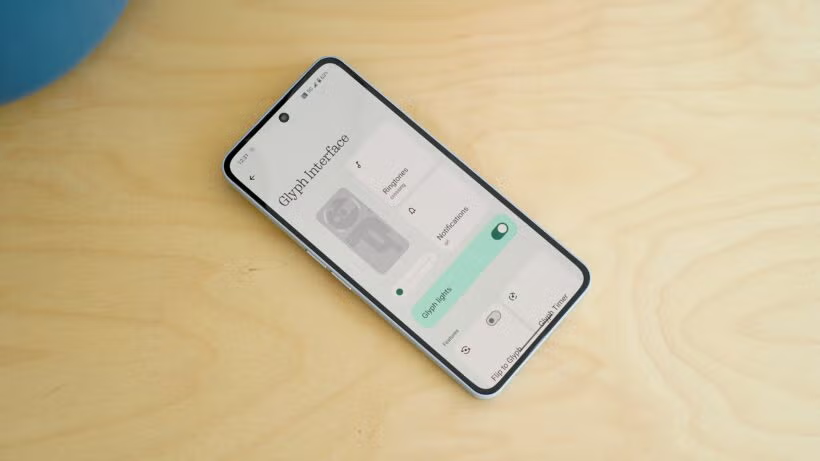
A new innovation could soon change the way we interact with our devices—by making their screens generate power while we use them.
This week, Silicon Valley-based startup LucentCell revealed a working prototype of the world’s first fully transparent photovoltaic screen, capable of turning ambient light into usable energy. The technology, which the company calls SolarGlass, transforms smartphone and tablet displays into discreet solar panels—charging the device anytime it’s exposed to light.
A Window Into the Future
Unlike traditional solar panels that use opaque silicon layers, SolarGlass integrates a layer of ultra-thin, nanomaterial-based solar cells that are nearly invisible to the naked eye. The panel harvests energy from both natural sunlight and artificial indoor lighting, providing a continuous trickle charge that the company says can extend device battery life by up to 60% on a single charge.
“Imagine using your phone all day without worrying about finding a charger,” said LucentCell CEO Maya Krishnan at the company’s press unveiling. “With SolarGlass, we’re making that future not only possible, but scalable.”
According to Krishnan, the technology has already been tested on OLED and mini-LED screens without any reduction in display quality or brightness. The company plans to license SolarGlass to phone manufacturers by early 2026, with a goal of integrating the panels into commercial devices by the end of that year.
Beyond Phones
While smartphones are the obvious starting point, LucentCell’s ambitions reach much further. The company is already working with partners in the wearables and automotive industries to develop transparent solar applications for smartwatches, augmented reality glasses, and car infotainment systems.
In the consumer tech world—where battery life and charging convenience are constant concerns—SolarGlass could be a breakthrough. For sustainability advocates, the implications are even bigger. If widely adopted, LucentCell’s technology could drastically reduce reliance on wall charging, lower device energy usage, and curb the demand for lithium-heavy battery upgrades.
Skepticism Remains
Despite the buzz, some industry analysts urge caution. “Transparent solar has long been a holy grail in materials science, but scaling it affordably has been the barrier,” said James Ayers, senior innovation analyst at FutureDesign. “If LucentCell has cracked both the cost and clarity issues, this could be a defining moment. But the devil is in the manufacturing details.”
LucentCell says its production process is based on modified roll-to-roll printing—similar to the one used for flexible displays—and can be integrated into existing display manufacturing pipelines. Still, widespread adoption will likely depend on how well the technology performs in day-to-day use across various lighting environments.
A Brighter, Wireless Tomorrow?
As technology increasingly weaves itself into everyday life, innovations like SolarGlass represent more than just a new feature—they hint at a larger shift toward ambient computing, where devices work in the background, powered passively by the world around us.
Whether SolarGlass becomes the next industry standard or a niche high-end feature, one thing is clear: LucentCell has tapped into a growing desire for smarter, greener, and more independent tech. And with the first generation of solar-screened devices already in testing, the wait for wireless, worry-free energy might be shorter than we think.
Leave a Reply