
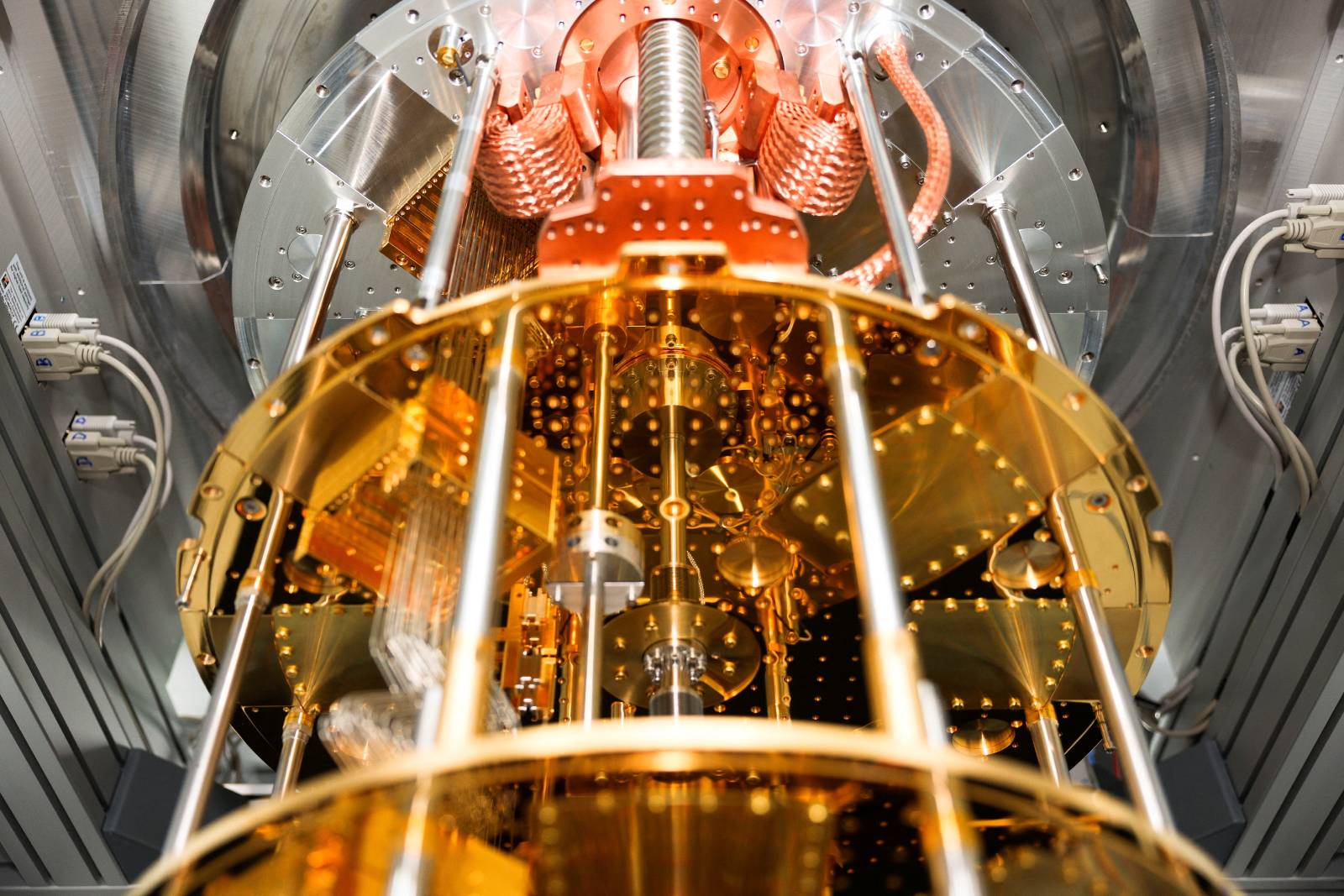
In a move that could radically accelerate the future of computing, a previously little-known startup named Qelsius has announced what it claims is the first-ever stable room-temperature quantum processor. The announcement, made during a surprise keynote at the Global Tech Frontier Conference in San Francisco, sent shockwaves through both the scientific community and the tech investment world.
Founded just three years ago by a group of ex-MIT physicists and AI engineers, Qelsius has operated largely in stealth mode until now. The company’s new quantum chip—codenamed Hermes—allegedly solves one of the most persistent challenges in quantum computing: the need for near-zero temperatures to maintain qubit stability.
A New Kind of Qubit
According to Qelsius CEO Dr. Nina Ortega, Hermes uses a novel material discovered in their labs that enables quantum coherence at room temperature without the need for expensive cryogenic cooling systems. “We’re not just improving quantum computing—we’re making it practical, portable, and scalable,” Ortega said during the keynote.
If verified, the breakthrough could reduce the cost of quantum systems by orders of magnitude, opening the door to widespread commercial use. Applications ranging from drug discovery to cybersecurity, and even advanced climate simulations, could suddenly become viable outside of national labs and corporate research facilities.
Skepticism and Hope in Equal Measure
The response from the scientific community has been cautiously optimistic. Dr. Kavita Menon, a leading quantum physicist at Caltech, noted: “If Qelsius’ claims are accurate, this is the kind of milestone that could usher in a new computing era. But independent validation will be essential. Extraordinary claims require extraordinary proof.”
Several academic labs and corporate research partners, including IBM and Intel, have already been invited to test early prototypes under strict nondisclosure agreements.
A Changing Industry Landscape
The announcement also reignited discussions about the future of AI, as room-temperature quantum computing could supercharge model training, enable previously impossible simulations, and unlock new frontiers in machine learning. Tech analysts have already dubbed Qelsius the “NVIDIA of the quantum age.”
Venture capital has taken notice, too. The company confirmed a new Series C funding round totaling $800 million, led by Sequoia Capital and including heavyweights like SoftBank and the UAE’s Mubadala Investment Company. Qelsius now holds a private valuation of $5.7 billion, despite having no public product.
What’s Next?
While much remains to be proven, Qelsius says it plans to release a developer beta platform called Qelsius One in early 2026, allowing researchers and enterprise partners to experiment with their architecture. A consumer-facing API for quantum-enhanced cloud computing is slated for late 2026.
Whether this is truly the quantum computing “iPhone moment” or just another overhyped claim in a crowded field, one thing is certain: Qelsius has everyone’s attention.
Leave a Reply